
Now Reading: How to Check the Carpet Area Before Buying Property A Guide to Smart and Secure Real Estate Decisions
-
01
How to Check the Carpet Area Before Buying Property A Guide to Smart and Secure Real Estate Decisions


How to Check the Carpet Area Before Buying Property A Guide to Smart and Secure Real Estate Decisions

Check the carpet area. This simple instruction may sound basic, but it holds one of the most vital keys to a wise and secure property purchase. For many first-time homebuyers or even seasoned investors, the visual appeal of a home can easily overshadow the technical aspects that need close attention. But real estate isn’t just about aesthetics it’s about legality, space utilization, and long-term value. Among the many important factors to consider, checking the carpet area is foundational to making an informed decision.
Check the carpet area to know what you truly own
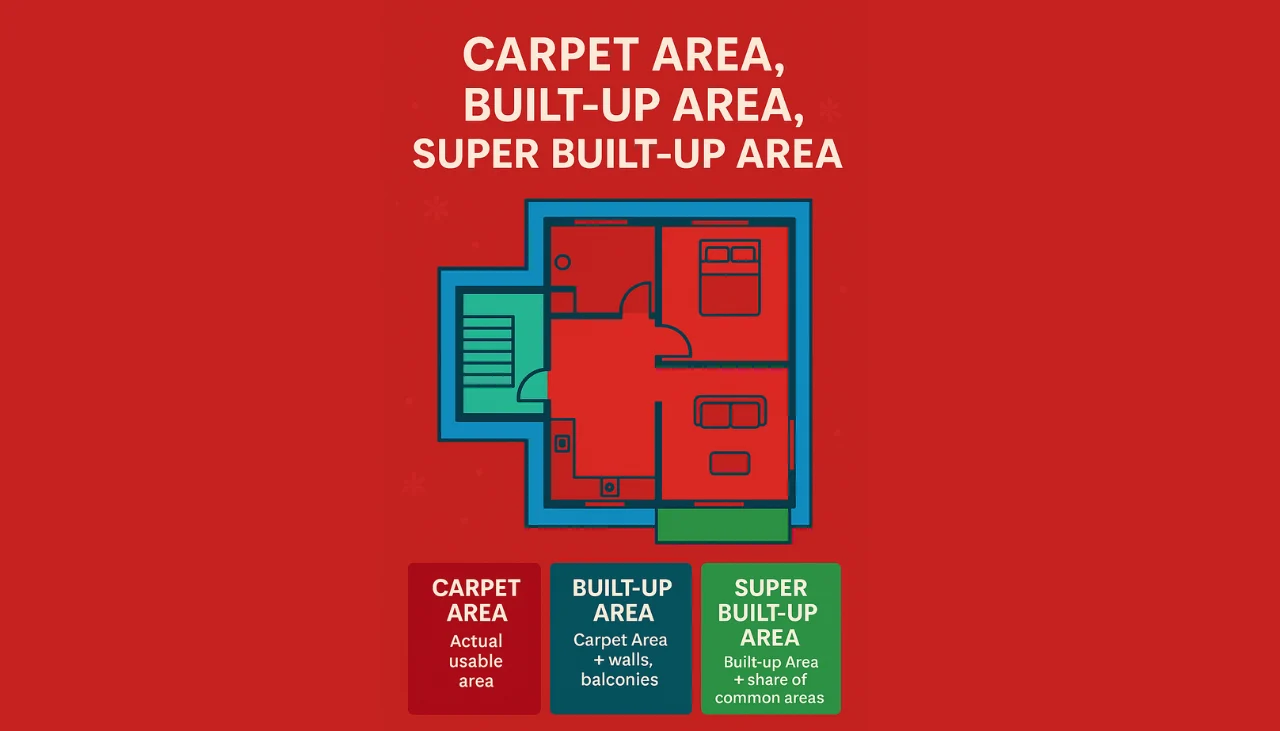
The term “carpet area” refers to the net usable floor area within the walls of your flat essentially the space you can actually walk on or place furniture on. It excludes common areas like staircases, lifts, verandahs, or clubhouses. Check the carpet area of a flat to know how much private space you are truly getting. Often, advertisements showcase super built-up areas, which include common areas as well. But what you really live in is the carpet area. That’s why it’s crucial to check the carpet area before proceeding with any deal.
Check the carpet area to avoid overpaying
One of the most common mistakes buyers make is evaluating price based on super built-up area. This can be misleading and might result in you paying more than what the property is truly worth. Always check the carpet area and calculate the cost per square foot based on that. It gives you a transparent view of your investment. Developers may inflate the common areas to present a bigger super built-up area, but your real living space doesn’t increase accordingly.
Check the carpet area through measurement and verification
If the property is ready, take a tape measure and verify it yourself or hire a professional. In under-construction properties, check the floor plan provided by the builder and ask for the exact carpet area in square feet. The Real Estate Regulatory Authority (RERA) mandates that developers disclose the carpet area clearly in their agreements. Check the carpet area mentioned in official documents and make sure it matches what you see on-site. Discrepancies here are red flags.
Check the carpet area to compare multiple properties
When looking at multiple listings, the only fair way to compare value is to check the carpet area in each. Two flats may have the same super built-up area, but vastly different carpet areas. Without checking this, you might choose a flat that offers significantly less usable space. Check the carpet area to make an apples-to-apples comparison.
Beyond carpet area: Legal precautions that matter
While the size of the space is critical, the title of the property is equally important. You must ensure that the seller has a valid and marketable title. A property can only be sold if the seller possesses legal ownership. If you buy from someone with a defective title, you’ll inherit that defect. Therefore, conduct legal due diligence. Examine the title deed, encumbrance certificate, and ensure there are no pending litigations. But even after confirming all legal documentation, don’t forget check the carpet area.
Check the carpet area as part of your checklist
Many buyers get overwhelmed with documentation tax receipts, sale agreements, mutation records but forget to focus on what they’re physically buying. You are not buying staircases or passageways you’re buying a home. Check the carpet area as part of your pre-purchase checklist. It will anchor you back to the practical reality of what your money is buying.
Check the carpet area in relation to the common area ratio
Builders often mention ratios like 75:25 or 80:20 between carpet area and common area. A higher carpet area ratio means you’re getting more private space. A lower ratio may mean spacious lobbies, wider staircases, or luxurious amenities but at the cost of your flat’s inner space. Check the carpet area and see if the trade-off aligns with your lifestyle needs. For some, shared amenities are worth it. For others, personal space is the priority.
Check the carpet area when signing the agreement
The agreement to sell must explicitly mention the carpet area. If it doesn’t, ask the builder or seller to add it. This ensures legal accountability and prevents future disputes. Check the carpet area in the final agreement and verify that it matches the builder’s initial claims and brochures. This one step can protect you from many headaches down the line.
Check the carpet area as a habit, not a formality
Don’t treat this as a mere checkbox on your buying journey. Make it a non-negotiable habit. Check the carpet area every time you consider a new property. Over time, this awareness will give you a sharp eye for good deals, and you’ll avoid getting misled by superficial metrics.
Conclusion: It starts with awareness
In property purchases, caution is not a sign of fear but of wisdom. Checking documents, verifying titles, understanding legal rights these are all essential. But equally crucial is the physical and spatial dimension of your investment. So, check the carpet area. Let it be your guiding metric. Let it bring clarity where ambiguity is common. Let it be the reason you walk into your new home not just satisfied but empowered.





Related Posts



Stay Informed With the Latest & Most Important News










Advertisement