
Now Reading: Sale Deed Verification: Property Verification Checklist for Sale Deed Verification of Properties in Hyderabad, Telangana
-
01
Sale Deed Verification: Property Verification Checklist for Sale Deed Verification of Properties in Hyderabad, Telangana

Sale Deed Verification: Property Verification Checklist for Sale Deed Verification of Properties in Hyderabad, Telangana

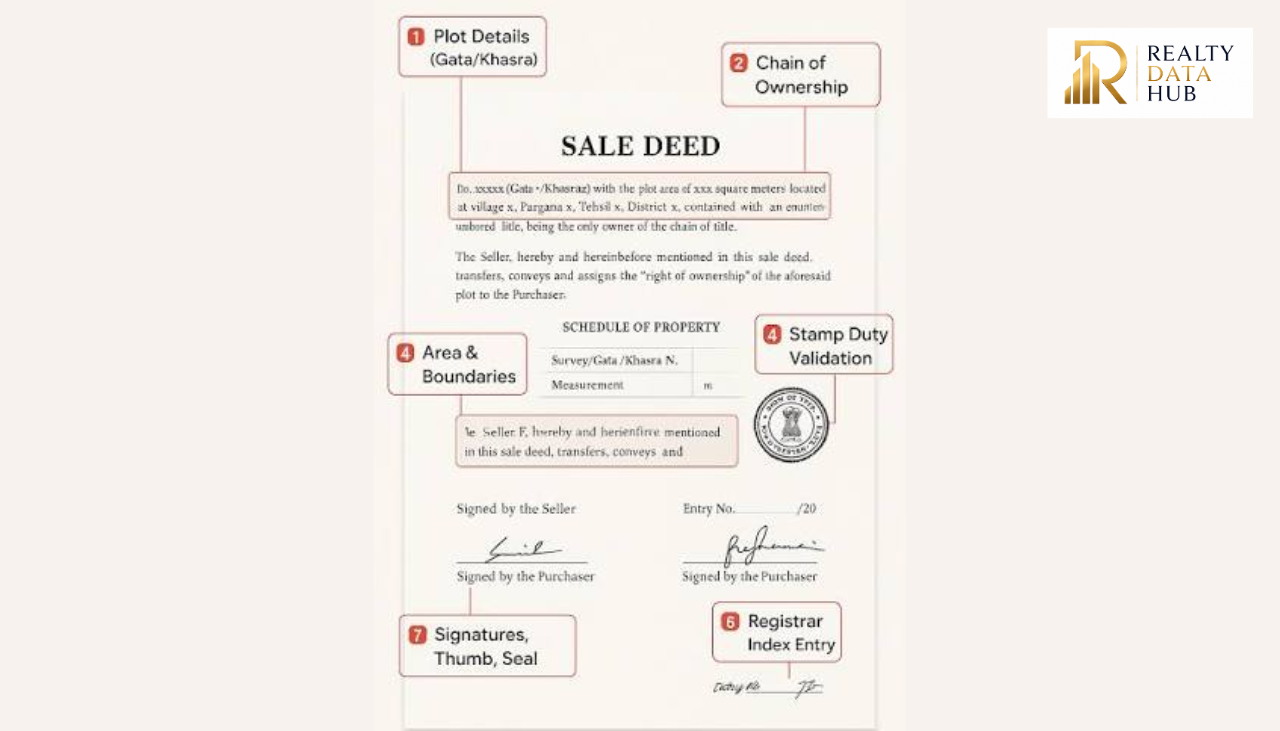
Sale Deed Verification is one of the most important legal processes before purchasing any residential, commercial, agricultural, or investment property in Hyderabad, Telangana. A property may appear attractive because of its location, pricing, or future appreciation potential, but every buyer should conduct thorough legal due diligence before making any financial commitment. The cornerstone of this process is to Check the antecedents of the vendor(s) because ownership history, legal title, and the seller’s authority determine whether the property can be transferred without future disputes.
Hyderabad’s real estate market continues to expand with HMDA layouts, TG-RERA approved apartments, villas, gated communities, commercial developments, and independent properties. While these opportunities are attractive, buyers must never overlook legal verification. The first step is always to Check the antecedents of the vendor(s) to confirm that the seller has a clear and marketable title. This process helps buyers avoid litigation, fraudulent sales, encroachments, forged documents, and ownership conflicts.
Why Sale Deed Verification Matters
A Sale Deed is the primary legal document transferring ownership from one party to another. However, merely possessing a Sale Deed does not automatically establish an undisputed title. Every buyer should Check the antecedents of the vendor(s) by reviewing the property’s ownership chain, supporting documents, government approvals, and registration records.
Proper Sale Deed Verification helps in:
- Confirming legal ownership
- Identifying title defects
- Preventing fraudulent transactions
- Verifying government approvals
- Ensuring loan eligibility
- Reducing legal risks
- Protecting long-term investment
Whether purchasing an apartment, villa, open plot, commercial property, or farmland, it is essential to Check the antecedents of the vendor(s) before signing any agreement.
Understanding the Sale Deed
A Sale Deed is a registered legal instrument executed between the seller and purchaser after consideration is paid. It includes:
- Details of buyer and seller
- Complete property description
- Survey numbers
- Boundaries
- Sale consideration
- Rights transferred
- Possession details
- Registration particulars
Even when these details appear complete, buyers should still Check the antecedents of the vendor(s) because previous ownership issues may not always be reflected in the latest Sale Deed.
Importance of Title Verification
Title verification confirms that the seller has a legal right to transfer ownership. This involves examining historical ownership records over several years. During this process, buyers must Check the antecedents of the vendor(s) to determine whether ownership has been acquired legally through sale, inheritance, gift, partition, court decree, or other valid means.
Title verification should include:
- Chain of title documents
- Registered Sale Deeds
- Gift Deeds
- Partition Deeds
- Release Deeds
- Succession documents
- Court orders
- Revenue records
A missing link in the ownership chain may indicate future legal complications.
Verify Government Approvals
Every property should have approvals from the appropriate authorities depending on its category.
Examples include:
- HMDA approvals
- DTCP approvals
- Municipal permissions
- Building approvals
- Layout sanctions
- Occupancy Certificate
- Completion Certificate
Even if approvals appear genuine, buyers must Check the antecedents of the vendor(s) to ensure the seller has the legal authority to transfer the approved property.
Examine Encumbrance Certificate
The Encumbrance Certificate (EC) reflects registered transactions affecting the property during a specified period.
It helps identify:
- Sale transactions
- Mortgage registrations
- Gift registrations
- Settlement deeds
- Release deeds
Although an EC provides valuable information, it should not be the only document relied upon. Buyers must also Check the antecedents of the vendor(s) independently to identify disputes that may not appear in registration records.
Verify Revenue Records
Revenue records establish possession and taxation history.
Important records include:
- Pattadar Passbook (where applicable)
- Mutation records
- Property tax receipts
- Khata records
- Land revenue receipts
- Municipal assessment records
These documents should match the Sale Deed information. Buyers should also Check the antecedents of the vendor(s) to ensure there are no inconsistencies in ownership.
Confirm Physical Possession
Document verification alone is not sufficient. Physical inspection helps identify:
- Boundary disputes
- Encroachments
- Illegal occupation
- Road access
- Utility availability
- Existing structures
During site inspection, it is equally important to Check the antecedents of the vendor(s) by interacting with neighbouring property owners whenever possible.
Verify Identity of Seller
The seller’s identity should be verified through valid documents such as:
- Aadhaar
- PAN
- Passport
- Address proof
- Photographs
If the seller represents a company, trust, partnership, or legal entity, examine:
- Board Resolution
- Partnership Deed
- Trust Resolution
- Authorization Letter
- Power of Attorney
Always Check the antecedents of the vendor(s) to confirm that the individual signing the Sale Deed has the legal authority to execute the transaction.
Verify Loans and Mortgages
Many properties may be financed through banks or financial institutions.
Verify whether:
- Loan has been fully repaid
- Mortgage has been released
- Bank No Due Certificate is available
- Original documents are available
Even after loan closure, continue to Check the antecedents of the vendor(s) to ensure no undisclosed financial liabilities remain.
Verify Court Cases
Search for pending litigation involving the property.
Possible disputes include:
- Ownership conflicts
- Partition suits
- Injunction orders
- Civil litigation
- Land acquisition matters
- Government claims
Legal due diligence becomes stronger when buyers Check the antecedents of the vendor(s) through court records and legal opinions.
Obtain Legal Opinion
A qualified property lawyer should review all available documents before purchase.
The legal opinion generally covers:
- Title verification
- Ownership chain
- Approval status
- Encumbrance review
- Litigation search
- Document consistency
- Registration compliance
An experienced lawyer will also Check the antecedents of the vendor(s) as part of comprehensive legal due diligence.
Verify Registration Details
Confirm that previous Sale Deeds have been properly registered with the Sub-Registrar Office.
Verify:
- Registration number
- Book number
- Volume
- Document number
- Date of registration
Registration verification becomes meaningful only after you Check the antecedents of the vendor(s) and validate the entire ownership chain.
Importance of Document Consistency
Every property document should contain matching information regarding:
- Owner name
- Survey number
- Plot number
- Extent
- Boundaries
- Municipal number
- Layout details
Even minor inconsistencies deserve clarification before proceeding.
Conclusion
Buying property in Hyderabad, Telangana, represents a significant financial commitment. Conducting comprehensive Sale Deed Verification minimizes legal uncertainty and strengthens confidence in the transaction. Rather than relying solely on advertisements, assurances, or a single document, buyers should review every relevant record, inspect the property physically, obtain a legal opinion, verify approvals, and most importantly, Check the antecedents of the vendor(s). This simple yet essential principle forms the foundation of safe property ownership and helps ensure that the investment remains legally secure for years to come.
Property Verification Checklist for Sale Deed Verification of Properties in Hyderabad, Telangana
A. Seller Verification
- ✅ Check the antecedents of the vendor(s)
- ✅ Verify Aadhaar and PAN
- ✅ Verify seller’s address proof
- ✅ Confirm photographs and signatures
- ✅ Verify legal authority to sell
- ✅ Verify Power of Attorney (if applicable) B. Ownership Verification
- ✅ Examine original Sale Deed
- ✅ Verify chain of title for at least 30 years
- ✅ Check Gift Deeds, Partition Deeds, Release Deeds
- ✅ Verify inheritance documents where applicable
- ✅ Confirm mutation records C. Registration Verification
- ✅ Verify registration details
- ✅ Confirm document number
- ✅ Verify Sub-Registrar records
- ✅ Cross-check certified copies D. Encumbrance Verification
- ✅ Obtain latest Encumbrance Certificate
- ✅ Check mortgages
- ✅ Verify loan closure documents
- ✅ Obtain No Due Certificate
- ✅ Confirm release of mortgage E. Government Approval Verification
- ✅ Verify HMDA approval
- ✅ Verify DTCP approval
- ✅ Verify TG-RERA registration (where applicable)
- ✅ Check layout approval
- ✅ Verify building permission
- ✅ Verify Occupancy Certificate
- ✅ Verify Completion Certificate F. Revenue Record Verification
- ✅ Verify property tax receipts
- ✅ Check municipal records
- ✅ Verify land revenue records
- ✅ Verify mutation entries
- ✅ Verify survey records G. Physical Inspection
- ✅ Verify boundaries
- ✅ Measure property dimensions
- ✅ Check road access
- ✅ Inspect for encroachments
- ✅ Verify utilities
- ✅ Confirm actual possession H. Legal Verification
- ✅ Search pending court cases
- ✅ Verify no injunction orders
- ✅ Obtain legal opinion
- ✅ Verify compliance with local laws
- ✅ Review all original documents I. Final Purchase Checklist
- ✅ Confirm consideration amount
- ✅ Verify possession details
- ✅ Ensure all original documents are handed over
- ✅ Register the Sale Deed
- ✅ Apply for mutation after registration
- ✅ Preserve certified copies of all documents
- ✅ Keep digital and physical records securely





Related Posts

Stay Informed With the Latest & Most Important News










Advertisement