
Now Reading: Title Deed Verification: Property Verification Checklist for Title Deed Verification of Properties in Hyderabad, Telangana
-
01
Title Deed Verification: Property Verification Checklist for Title Deed Verification of Properties in Hyderabad, Telangana

Title Deed Verification: Property Verification Checklist for Title Deed Verification of Properties in Hyderabad, Telangana

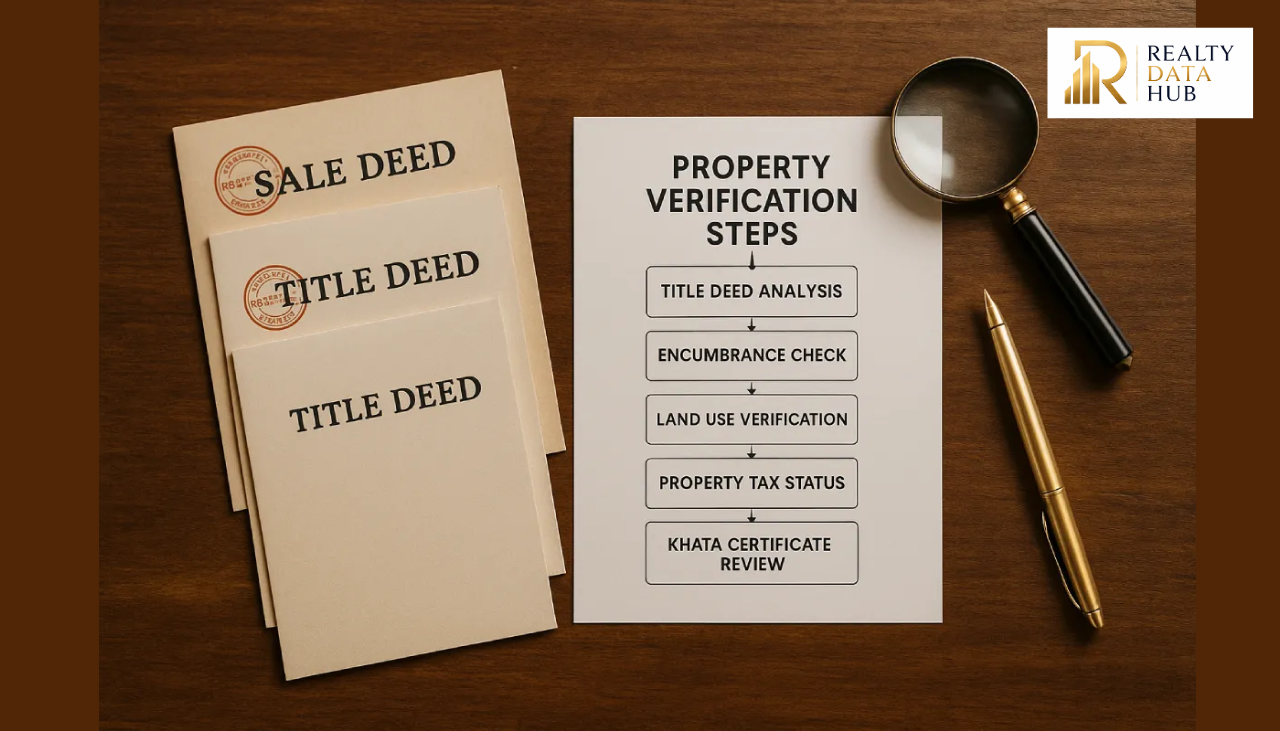
Title Deed Verification is one of the most important steps before purchasing any residential, commercial, agricultural, villa, apartment, or open plot in Hyderabad, Telangana. A property may appear attractive, have a competitive price, and even possess several approvals, but unless every legal aspect is verified, buyers may expose themselves to ownership disputes, financial losses, or future litigation. One of the most fundamental principles of legal due diligence is to Check the antecedents of the vendor(s) before signing any agreement or making any payment. Whether you are a first-time buyer or an experienced investor, Check the antecedents of the vendor(s) should always remain your first priority.
Buying property is often a lifetime investment. Therefore, every buyer should conduct comprehensive title verification instead of relying solely on verbal assurances, brochures, or advertisements. While approvals such as HMDA, DTCP, GHMC, TG-RERA, or municipal permissions indicate compliance with planning regulations, they do not automatically establish ownership. The ownership history must be legally verified. This is why experienced legal professionals repeatedly advise buyers to Check the antecedents of the vendor(s) before proceeding with any transaction.
Why Title Deed Verification Matters
Title deed verification establishes whether the seller has a valid, marketable, and transferable title over the property. It also helps identify pending litigation, mortgages, government acquisition notices, succession issues, forged documents, or illegal transfers.
A thorough verification process protects buyers from:
- Ownership disputes
- Fake sale deeds
- Multiple sales of the same property
- Encroachments
- Pending bank loans
- Court litigation
- Revenue disputes
- Unauthorized constructions
- Missing approvals
Before reviewing any document, always remember to Check the antecedents of the vendor(s). This simple but essential practice can prevent significant legal complications later.
Verify the Ownership Chain
The ownership chain should ideally be clear and continuous for at least the previous 30 years or from the earliest available title document. Every transfer should be legally supported by registered documents.
The ownership chain may include:
- Sale Deeds
- Gift Deeds
- Partition Deeds
- Release Deeds
- Settlement Deeds
- Court Decrees
- Succession Certificates
- Probate Orders
- Family Settlement Agreements
Every document should logically connect to the next transfer without unexplained gaps. During this examination, continue to Check the antecedents of the vendor(s) by confirming that every owner acquired the property legally.
Verify the Identity of the Seller
Identity verification is equally important.
Verify:
- Aadhaar Card
- PAN Card
- Passport (if applicable)
- Recent photographs
- Address proof
- Mobile number
- Signature consistency
If the seller represents multiple owners, ensure proper authorization exists.
Again, Check the antecedents of the vendor(s) to confirm that the individuals executing the sale have the legal authority to transfer ownership.
Examine the Title Documents
The original title documents should be inspected carefully.
Important documents include:
- Original Registered Sale Deed
- Parent Documents
- Link Documents
- Encumbrance Certificate
- Pattadar Passbook (where applicable)
- Mutation Records
- Revenue Records
- Tax Receipts
- Building Permissions
- Occupancy Certificate
- Completion Certificate
Original documents should be examined for alterations, overwriting, damaged pages, missing pages, or inconsistent registration details.
Before accepting any document as genuine, always Check the antecedents of the vendor(s).
Verify Encumbrance Status
The Encumbrance Certificate (EC) issued by the Registration Department is one of the most important records.
It helps identify:
- Registered mortgages
- Sale transactions
- Gift deeds
- Release deeds
- Court attachments
- Other registered encumbrances
However, buyers should understand that certain legal liabilities may not appear in the EC. Therefore, legal due diligence should never rely solely on this document.
Simultaneously, Check the antecedents of the vendor(s) through independent legal verification.
Verify Land Revenue Records
For land transactions in Telangana, examine revenue records carefully.
Common records include:
- Pahani
- ROR 1-B
- Mutation Entries
- Dharani Records
- Survey Records
- FMB Sketch
- Village Maps
Revenue records should match the registered documents regarding survey numbers, extent, ownership, and classification.
Throughout this process, Check the antecedents of the vendor(s) to ensure consistency across all government records.
Verify Municipal Approvals
For properties within Hyderabad, verify approvals issued by the competent authority.
Depending on the location, these may include:
- HMDA Layout Approval
- DTCP Approval
- GHMC Building Permission
- Municipality Approval
- Gram Panchayat Records
- TG-RERA Registration
- Occupancy Certificate
- Completion Certificate
Remember that planning approvals alone do not establish ownership. Buyers should continue to Check the antecedents of the vendor(s) independently.
Verify Litigation Status
Court cases can significantly affect property ownership.
Search for:
- Civil disputes
- Partition suits
- Injunction orders
- Family disputes
- Land acquisition notices
- Government claims
- High Court cases
- Supreme Court matters
Legal professionals often conduct litigation searches before certifying title.
During litigation verification, continue to Check the antecedents of the vendor(s) thoroughly.
Verify Bank Loans and Mortgages
If the property has been financed through a bank or financial institution:
- Obtain No Due Certificate.
- Verify loan closure.
- Confirm release of mortgage.
- Obtain original title documents from the lender.
- Ensure mortgage satisfaction has been registered where applicable.
A bank release alone does not replace complete due diligence. Buyers should still Check the antecedents of the vendor(s).
Verify Physical Possession
A site inspection should confirm:
- Property boundaries
- Survey stones
- Access roads
- Existing structures
- Encroachments
- Neighbourhood details
- Actual possession
Neighbours often provide valuable information regarding long-standing ownership and disputes.
Even after a successful site inspection, never forget to Check the antecedents of the vendor(s).
Verify Legal Heirs and Family Rights
Where inherited property is involved, verify:
- Legal Heir Certificate
- Family Tree
- Succession Certificate
- Probate
- Release Deeds
- Consent of co-owners
Joint family properties require additional legal scrutiny before purchase.
As always, Check the antecedents of the vendor(s) before relying on inheritance claims.
Consult a Property Lawyer
Professional legal verification generally includes:
- Title verification
- Ownership analysis
- Encumbrance review
- Litigation search
- Revenue verification
- Municipal approval verification
- Legal opinion
- Risk assessment
Independent legal advice helps buyers make informed decisions based on verified records rather than assumptions.
A qualified lawyer will invariably recommend that clients Check the antecedents of the vendor(s) before completing any transaction.
Property Verification Checklist for Title Deed Verification
Ownership Verification
- ☐ Verify original registered Sale Deed.
- ☐ Verify parent documents.
- ☐ Verify complete chain of ownership.
- ☐ Check the antecedents of the vendor(s).
- ☐ Verify identity of seller.
- ☐ Verify co-owner consent.
- ☐ Verify Power of Attorney, if applicable. Revenue Record Verification
- ☐ Verify Pahani.
- ☐ Verify ROR 1-B.
- ☐ Verify Mutation.
- ☐ Verify Dharani records.
- ☐ Verify Survey Number.
- ☐ Verify land classification. Registration Verification
- ☐ Obtain latest Encumbrance Certificate.
- ☐ Verify registration details.
- ☐ Match document numbers.
- ☐ Verify registration office records. Municipal Verification
- ☐ HMDA approval.
- ☐ DTCP approval.
- ☐ GHMC permission.
- ☐ Municipality approval.
- ☐ Building Permission.
- ☐ Occupancy Certificate.
- ☐ Completion Certificate.
- ☐ TG-RERA registration (where applicable). Financial Verification
- ☐ Verify outstanding loans.
- ☐ Obtain No Due Certificate.
- ☐ Verify mortgage release.
- ☐ Confirm original documents are available. Litigation Verification
- ☐ Civil Court search.
- ☐ High Court search.
- ☐ Family disputes.
- ☐ Government acquisition notices.
- ☐ Pending legal proceedings. Property Inspection
- ☐ Measure property extent.
- ☐ Verify survey boundaries.
- ☐ Confirm physical possession.
- ☐ Inspect access road.
- ☐ Check for encroachments.
- ☐ Speak with neighbouring property owners. Tax Verification
- ☐ Property tax receipts.
- ☐ Water tax.
- ☐ Electricity dues.
- ☐ Municipal dues. Apartment Verification
- ☐ Association records.
- ☐ Share certificate (if applicable).
- ☐ Maintenance dues.
- ☐ Occupancy Certificate.
- ☐ Common area approvals. Final Legal Due Diligence
- ☐ Obtain legal opinion.
- ☐ Verify document authenticity.
- ☐ Review all approvals.
- ☐ Confirm marketable title.
- ☐ Check the antecedents of the vendor(s) before signing any agreement.
- ☐ Verify every document before making advance payment.
- ☐ Register the sale only after satisfactory legal verification. Conclusion
Property purchases in Hyderabad, Telangana require careful legal due diligence, regardless of the property’s size or value. A systematic review of title documents, ownership history, approvals, revenue records, encumbrances, litigation status, and physical possession can significantly reduce legal risks. Throughout the verification process, one guiding principle should never be overlooked: Check the antecedents of the vendor(s). By consistently applying this principle and following a structured verification checklist, buyers can make informed decisions and help ensure that the property they acquire has a clear, marketable, and legally transferable title.





Related Posts


Stay Informed With the Latest & Most Important News











Advertisement