
Now Reading: Encumbrance Certificate (EC): Property Verification Checklist for Encumbrance Certificate (EC) of Properties in Hyderabad, Telangana
-
01
Encumbrance Certificate (EC): Property Verification Checklist for Encumbrance Certificate (EC) of Properties in Hyderabad, Telangana

Encumbrance Certificate (EC): Property Verification Checklist for Encumbrance Certificate (EC) of Properties in Hyderabad, Telangana

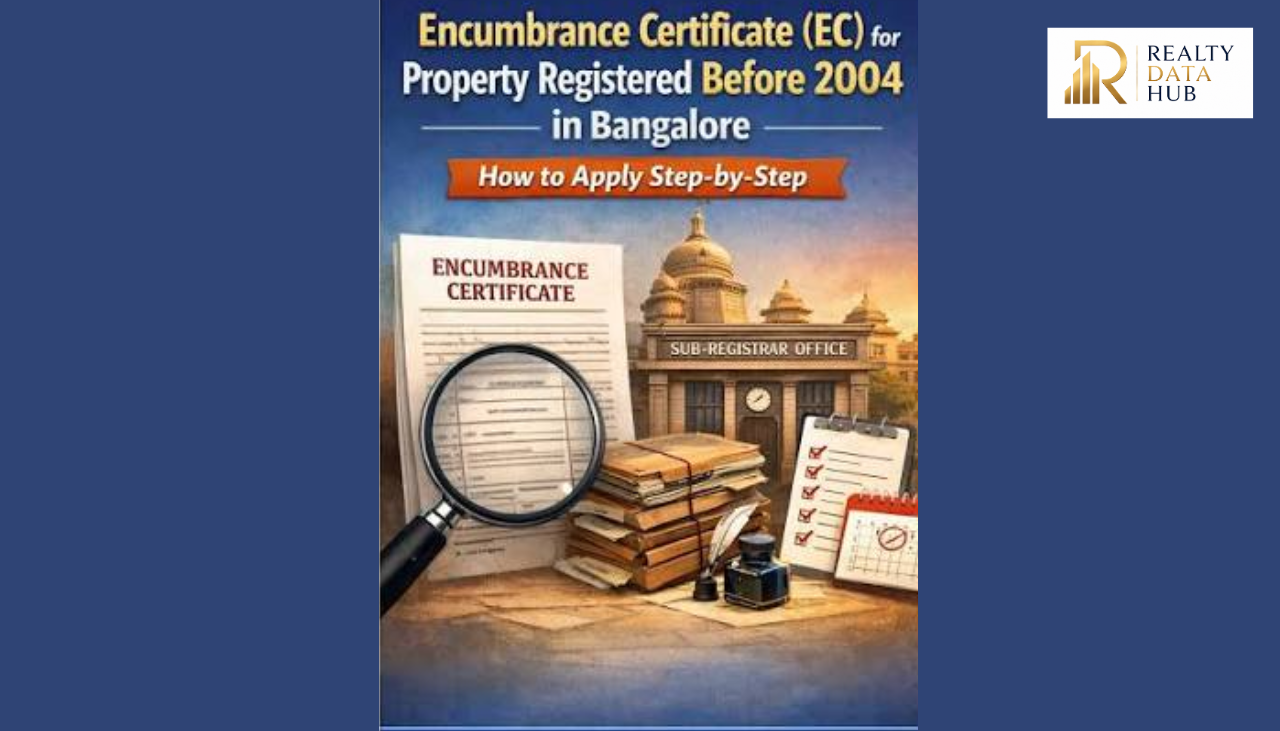
Encumbrance Certificate (EC) is one of the most important documents to examine before purchasing, selling, financing, or investing in real estate in Hyderabad, Telangana. It provides valuable information about the registered financial and legal transactions associated with a property during a specified period. Although an Encumbrance Certificate is a vital document, it should always be evaluated alongside several other property records to ensure a secure transaction. One of the most effective ways to minimize legal and financial risks is to Check the antecedents of the vendor(s) before making any commitment. Whether the property is residential, commercial, or agricultural, careful verification helps buyers make informed decisions.
Understanding the Importance of an Encumbrance Certificate (EC)
An Encumbrance Certificate reflects whether a property has registered liabilities such as mortgages, sales, gifts, leases, or other transactions recorded with the Sub-Registrar’s Office. Buyers often request this certificate to confirm that the property has a clear history of registered dealings.
However, an EC alone may not reveal every legal issue. Certain court disputes, unregistered agreements, family settlements, or inheritance matters may not appear in the certificate. Therefore, it is essential to Check the antecedents of the vendor(s) before relying solely on the EC.
A thorough verification process reduces uncertainty and supports better decision-making when purchasing property in Hyderabad.
Why Property Verification Matters
Property purchases typically involve significant financial commitments. Even a seemingly perfect property may have hidden issues if due diligence is incomplete. A systematic verification process helps identify inconsistencies before they become expensive legal problems.
An important part of this process is to Check the antecedents of the vendor(s) by reviewing ownership history, identity documents, legal authority to sell, and previous transactions.
Proper verification also helps lenders, legal advisors, and buyers confirm that documentation is consistent across government records.
Essential Documents to Review Along with the EC
An Encumbrance Certificate should be reviewed together with multiple supporting documents, including:
- Registered Sale Deed
- Title Deeds
- Mother Deed
- Property Tax Receipts
- Mutation Records
- Approved Building Plan
- Occupancy Certificate (where applicable)
- Layout Approval
- Identity Proof of Seller
- Address Proof of Seller
- Latest Utility Bills
- Survey Records
- Revenue Records
While reviewing these records, always Check the antecedents of the vendor(s) to ensure that ownership claims match the supporting documentation.
Verifying Ownership History
Ownership continuity is one of the strongest indicators of a property’s legal standing. Every transfer should be supported by properly registered documents without unexplained gaps.
The ownership chain should clearly establish how the property changed hands over the years.
During this review, remember to Check the antecedents of the vendor(s) by confirming:
- Identity consistency
- Previous ownership records
- Authority to transfer property
- Relationship among family members in inherited properties
- Supporting succession documents where necessary
A well-documented ownership chain significantly reduces transaction risks.
Confirming Registration Details
Every registered property transaction should match the records maintained by the registration authorities.
Review:
- Document numbers
- Registration dates
- Survey numbers
- Property boundaries
- Extent of land
- Schedule descriptions
Any mismatch deserves careful investigation.
At this stage, continue to Check the antecedents of the vendor(s) to ensure that the person executing the sale is the lawful owner or an authorized representative.
Examining Financial Liabilities
An EC may reveal registered mortgages or charges created against the property.
Buyers should verify:
- Whether loans have been repaid
- Whether mortgage releases have been registered
- Whether any financial institution still has an interest in the property
- Whether multiple loans exist
Alongside this review, always Check the antecedents of the vendor(s) to understand whether the seller has properly discharged previous obligations.
Physical Verification of the Property
Documentation should always be supported by a physical inspection.
Inspect:
- Boundary measurements
- Access roads
- Existing structures
- Encroachments
- Neighboring developments
- Property identification marks
The physical property should match the registered description.
Before finalizing any transaction, Check the antecedents of the vendor(s) and compare their statements with the actual condition of the property.
Reviewing Government Approvals
Properties in Hyderabad may require approvals from the relevant planning and municipal authorities depending on the nature of development.
Review:
- Building permissions
- Layout approvals
- Completion approvals
- Occupancy certificates
- Development permissions
Government approvals help establish regulatory compliance.
Even when approvals appear complete, continue to Check the antecedents of the vendor(s) to ensure that approvals correspond to the seller’s ownership records.
Legal Review Before Purchase
Professional legal scrutiny is an essential part of property verification.
A legal expert can examine:
- Title documents
- Registration records
- EC details
- Court records
- Revenue entries
- Municipal records
- Property descriptions
During legal review, the instruction to Check the antecedents of the vendor(s) remains equally important because document authenticity alone may not fully establish ownership credibility.
Special Considerations for Hyderabad Properties
Hyderabad has experienced rapid urban expansion, making property verification increasingly important.
Buyers should carefully review:
- Survey numbers
- Land classification
- Municipal jurisdiction
- Road widening proposals
- Development restrictions
- Utility access
- Property dimensions
Additionally, Check the antecedents of the vendor(s) to confirm whether previous transfers were properly executed and legally valid.
Avoiding Common Mistakes
Many property disputes arise because buyers overlook basic verification steps.
Common mistakes include:
- Relying only on the EC
- Ignoring title verification
- Skipping physical inspection
- Not reviewing historical ownership
- Overlooking municipal approvals
- Failing to verify identity documents
Perhaps the most avoidable mistake is neglecting to Check the antecedents of the vendor(s) before entering into a sale agreement.
Property Verification Checklist
Use the following checklist before purchasing property in Hyderabad, Telangana.
| Verification Item | Status |
|---|---|
| Obtain the latest Encumbrance Certificate (EC) | ☐ |
| Verify ownership chain | ☐ |
| Review registered Sale Deed | ☐ |
| Examine Mother Deed | ☐ |
| Confirm title continuity | ☐ |
| Check the antecedents of the vendor(s) | ☐ |
| Verify identity documents | ☐ |
| Confirm address proof | ☐ |
| Verify survey numbers | ☐ |
| Match property boundaries | ☐ |
| Review tax receipts | ☐ |
| Verify mutation records | ☐ |
| Examine building approvals | ☐ |
| Review occupancy certificate | ☐ |
| Confirm layout approval | ☐ |
| Check mortgage entries in EC | ☐ |
| Verify loan closure documents | ☐ |
| Inspect property physically | ☐ |
| Verify municipal records | ☐ |
| Review utility records | ☐ |
| Conduct legal scrutiny | ☐ |
| Confirm seller’s authority to sell | ☐ |
| Verify inheritance documents if applicable | ☐ |
| Review revenue records | ☐ |
| Confirm possession details | ☐ |
| Obtain legal opinion | ☐ |
| Complete final document verification | ☐ |
Conclusion
An Encumbrance Certificate (EC) serves as an essential document for understanding the registered transaction history of a property in Hyderabad, Telangana. Nevertheless, responsible property verification extends far beyond obtaining an EC. Reviewing title documents, ownership records, government approvals, financial liabilities, municipal records, and conducting physical inspections all contribute to a well-informed property purchase.
Throughout the verification process, one guiding principle deserves repeated attention: Check the antecedents of the vendor(s). Careful verification of the seller’s ownership history, legal authority, supporting documentation, and transaction records can strengthen confidence in the purchase decision and help identify potential issues before completing the transaction. A disciplined, document-based approach provides a stronger foundation for secure and transparent property transactions.





Related Posts

Stay Informed With the Latest & Most Important News










Advertisement